Structure Design
Design channel layouts and energy distribution through phase profiles, diffraction orders and detector positions.

COMPUTATIONAL SPECTROSCOPY
Two approaches—beam splitting and filtering—connect optical control, detection, system calibration and reconstruction algorithms.
01 / TWO ROUTES
Diffractive and phase structures control output direction or spot distribution. Spectral measurement additionally requires wavelength-dependent channel responses to be designed and calibrated so the detected signals contain distinguishable spectral information.
Design channel layouts and energy distribution through phase profiles, diffraction orders and detector positions.
Detector arrays read intensity at each output location, accounting for crosstalk, optical efficiency and spot stability.
Existing reports cover DOE prototypes for VCSEL-array beam splitting, imprint characterization and measured spots. Beam splitting alone does not establish spectral resolving performance.
Micro/nano resonators modify transmission, reflection or absorption. A set of response functions encodes the incident spectrum, which is reconstructed using detector readout and a calibration matrix.
Adjust geometry, period, materials and layer structures to create differentiated spectral responses.
Evaluate channel correlation, transmission, noise, incidence angle and polarization, rather than peak width alone.
Reports show localized surface plasmon resonance filters and multichannel control. Integration with the detector system and response-matrix calibration are subsequent steps.
02 / CALIBRATION & RECONSTRUCTION
y is measured channel intensity; A is the calibrated response of the optical structure, detector and optical path; s is the unknown spectrum; n is noise. Constrained or regularized reconstruction is evaluated against independent reference spectra.
Control the optical field through materials, geometry and array design to establish channel encoding responses.
Establish calibration relationships using reference spectra, dark frames and system response measurements.
Acquire corresponding spectra, images or sensor signals at the site and record acquisition conditions.
Process signals using calibrated responses and assess error against independent reference data.
Channel count does not directly equal the number of independently resolvable spectral lines. Resolving ability depends on system response, signal-to-noise ratio, calibration and reconstruction conditions.
03 / RESEARCH EVIDENCE
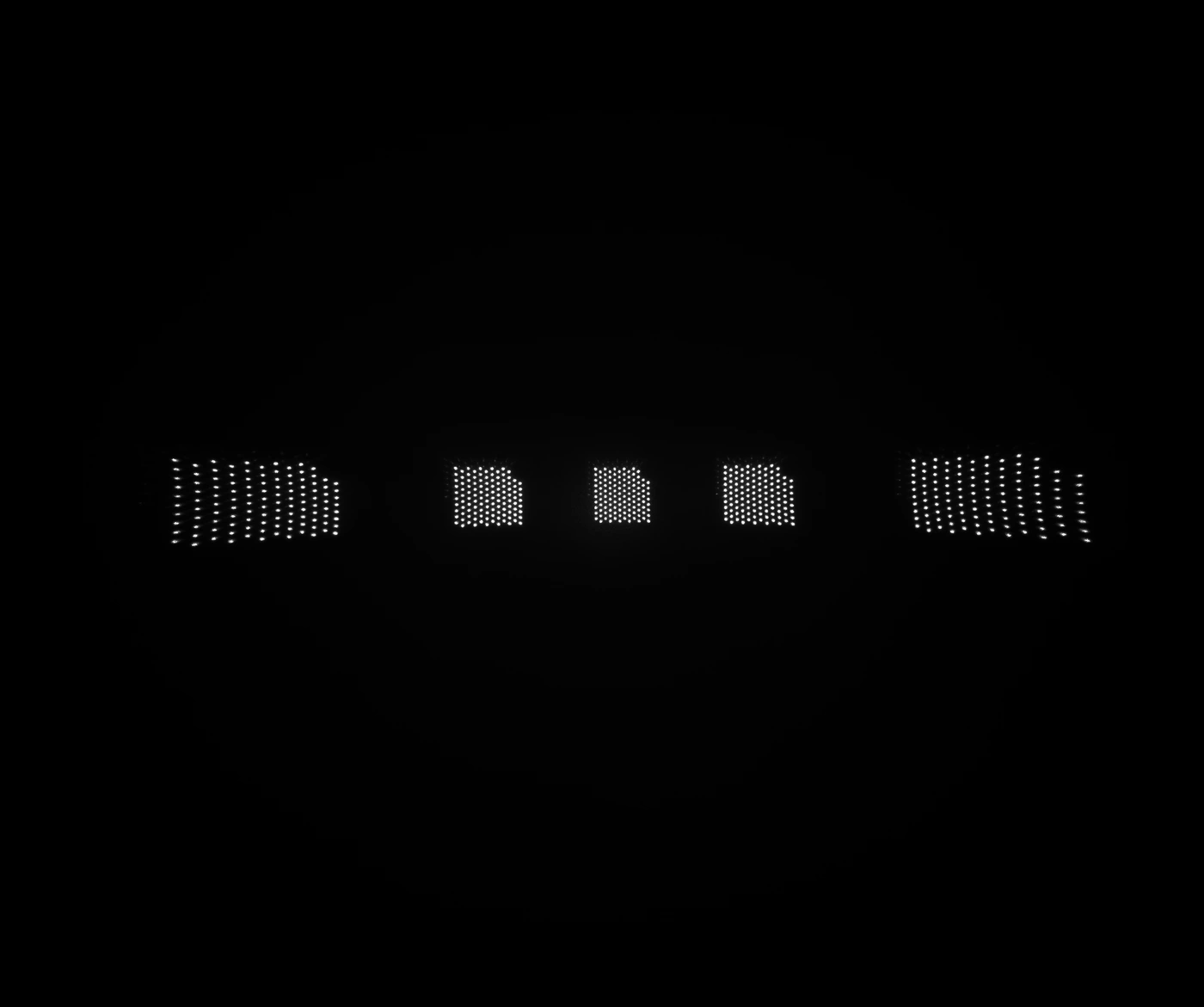
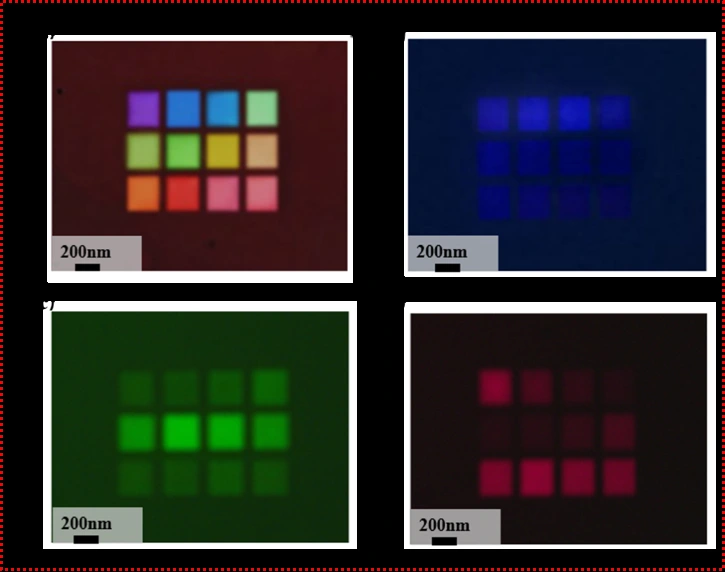
Technical references:Computational spectroscopy with microfilter arrays (Nature Communications);Metasurface infrared spectral reconstruction (Optics Letters)。
CONTACT
Contact us for product selection, development
and project collaboration.
266 Fangzheng Avenue, High-tech Park, Liangjiang New Area, Chongqing, China
Zhongke Yaoguang (Chongqing) Optoelectronics Technology Co., Ltd.